
Create Multiple Products Your Customers Will Buy
Eben Pagan reveals how to create multiple products your customers will buy by scripting their journey timeline and identifying universal needs. He explains how to map out customer progression from starter products to advanced offerings using specific timeframes and psychological triggers.
Key Moments
How to Script Your Customer Journey Timeline -- Create a predictable path for when customers will need your next product
The More Personal the Insight the More Universal the Market Need
The principle 'the more personal, the more universal' - deeply personal insights reveal needs shared by entire market segments
Break Solutions Into Psychological and Practical Product Lines
Break your solution into different aspects and create specific products for each. Look for psychological components alongside practical ones to expand your product line.
Create Specific Timeframes for Customer Level Progression
Create specific timeframes for customer progression rather than leaving advancement to chance - predict when they'll be ready for the next level
Create Multiple On-Ramps for Different Market Segments
Create different on-ramps and front-end products for different market segments while maintaining the same core curriculum
Lead With One Targeted Hit Product Before Expanding
Create one targeted hit product first to capture customers, then sell them multiple solutions. Trying to reach everyone with one product prevents customer interest.
Relevant Clips16
- How-To
How to Script Your Customer Journey Timeline -- Create a predictable path for when customers will need your next product
- Teaching
Map Customer Milestones to Predict Next-Product Readiness
Script out specific timeframes and milestones for customer progression. Map when they'll achieve results with your first product and predict when they'll be ready for the next level.
- Teaching
Break Solutions Into Psychological and Practical Product Lines
Break your solution into different aspects and create specific products for each. Look for psychological components alongside practical ones to expand your product line.
- Teaching
One Curriculum Multiple Front-End Products for Different Segments
Create different front-end products that appeal to specific market segments while leading to the same core curriculum. Customize the entry point, not the entire system.
- Teaching
Lead With One Targeted Hit Product Before Expanding
Create one targeted hit product first to capture customers, then sell them multiple solutions. Trying to reach everyone with one product prevents customer interest.
- Teaching
Most Personal Frustrations Reveal the Most Universal Needs
Observe customers in their natural environment to spot small but universal frustrations. The most personal insights often reveal the most universal needs.
- Teaching
Create Specific Timeframes for Customer Level Progression
Create specific timeframes for customer progression rather than leaving advancement to chance - predict when they'll be ready for the next level
- Teaching
Create Multiple Product Categories for One Core Solution
Create multiple product categories addressing different aspects of your core solution rather than trying to solve everything with one product
- Teaching
Hit Product First Then Sell Additional Solutions
Use a hit product to capture a large customer base, then sell them additional solutions rather than trying to reach everyone with one product
- Teaching
Map the Timeline for When Customers Need Each Subsequent Product
Script the customer journey timeline by mapping out exactly when customers will need each subsequent product after their initial purchase
- Teaching
The More Personal the Insight the More Universal the Market Need
The principle 'the more personal, the more universal' - deeply personal insights reveal needs shared by entire market segments
- Teaching
Create Multiple On-Ramps for Different Market Segments
Create different on-ramps and front-end products for different market segments while maintaining the same core curriculum
Show 4 more
- Teaching
Observe Customers in Natural Environments to Find Product Lines
Observe customers in their natural environment to discover universal needs that can become entire product lines
- Quotable▶ 4:06
Land the Home Run First, Then Sell Everything Else
if i could have that amazing home run hit right at the beginning i'm going to get a big flood of customers and then i can sell them all of these other things that they might need
- Quotable▶ 3:45
Customers Want Products Made Specifically for Them
the customer wants to find someone who just is creating something for them
- Quotable▶ 1:51
The More Personal the More Universal
the more personal the more universal
Entities Touched
Concepts
Questions
Canonical Teachings
Summary
Scripting the Customer Journey Timeline
Eben reveals how to map out exactly when customers will be ready for your next product by creating specific timeframes and milestones. Using a golf improvement example, he shows how to predict 14-day results, 30-day realizations, and 30-60 day advancement triggers.
The Power of Customer Observation
Through Procter & Gamble's breakthrough detergent spout innovation, Eben demonstrates how observing customers in their natural environment reveals universal needs. The principle 'the more personal, the more universal' guides this approach to product development.
Creating Multiple Product Entry Points
Rather than one product for everyone, Eben teaches using targeted hit products to capture large customer bases, then selling additional solutions. He explains creating different front-end products for specific market segments while maintaining the same core curriculum.

Counterpoint
Claim: “Create one product that appeals to everyone because 'this is good for everybody'”
Reframe: Start with one targeted hit product to capture customers, then sell them multiple solutions
The fundamental conflict prevents customer interest because 'the customer wants to find someone who just is creating something for them' - but you can use a targeted hit to 'get a big flood of customers and then sell them all of these other things'
Claim: “Product insights come from market research surveys and focus groups”
Reframe: The most valuable insights come from observing customers in their natural environment
Procter & Gamble's breakthrough pour spout innovation came from observers watching housewives in their homes, not from surveys - leading to a product that caused 'quite a stir among the human population'
Related Content
Eben Interviews Jorge Cruise
Discover how Jorge Cruise used one simple survey technique to identify a million-dollar book idea that outsells major competitors.
Targeting The Right Niche
Discover the counterintuitive niche targeting strategy that turned Eben Pagan's $40 ebook into multiple million-dollar business launches.
What Your Customers Value Most
Discover why your first product version should be minimal and how creating an imaginary customer avatar can revolutionize your product development process.
The Top Money Making Activities In Business
Discover the only two activities that actually generate revenue in business while most entrepreneurs waste time on everything else.
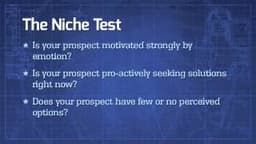
How To Test If Your Niche Will Make Money with Eben Pagan
Discover the simple three-question test that reveals whether your niche will generate profit or leave you struggling to find customers.

3 Keys Of A Successful Business Idea
Why selling tooth decay prevention fails but solving toothaches creates million-dollar businesses.
Topics
Coaching Strategies
Business Frameworks
Common Mistakes