Teaching

Targeting A Profitable Niche

Targeting A Profitable Niche

Eben Pagan teaches how to identify and target profitable niches by focusing on customer needs rather than personal preferences. He reveals the 3-question niche test and explains why empathy is the most profitable business skill for creating products that sell themselves.

Targeting A Profitable Niche

0:00--:--
Listen:Website

The Critical Foundation of Niche Selection

Eben opens with a stark warning that wrong niche selection dooms any business effort. He reframes the common approach of choosing your ideal customer, teaching instead that successful niches are discovered by identifying existing customer needs rather than personal preferences.

Empathy as the Ultimate Profit Driver

The most profitable business skill isn't marketing or sales - it's empathy. Eben explains how developing genuine perspective-taking abilities provides insights into customer emotions, buying behavior, and the exact language that motivates prospects to purchase.

The Product-as-Obstacle Reframe

In a counterintuitive teaching, Eben positions your product not as the solution but as an obstacle customers must overcome to reach their desired outcome. This perspective shift leads to creating streamlined, outcome-focused products rather than comprehensive knowledge dumps.

The Three-Question Niche Validation Test

Before investing time or money, run every niche through Eben's three critical questions about customer pain, active search behavior, and perceived options. This framework prevents the costly mistakes of targeting unmotivated prospects or entering oversaturated markets.

The Proven Profitable Categories

Eben reveals the three mega niches that generate 80-90% of information product sales: health, relationships, and money. Within these categories, he identifies 29 specific sub-niches representing multi-million dollar opportunities that will work long into the future.

Questions This Episode Answers

How do I know if my niche will be profitable before I invest time and money?

If you get three yeses, you've got a niche or product that you owe it to yourself to test. If you don't get three yeses, you want to keep working on it until you get three yeses.

Eben Pagan13:29

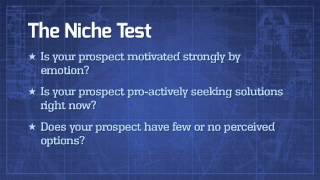
Use Eben Pagan's 3-question niche test: Is your customer experiencing pain/urgency or irrational passion? Are they proactively looking for solutions? Do they have few or no perceived options? You need three 'yes' answers to have a niche worth testing.

What are the most profitable niches for information products?

Most information products that are sold, in my experience, are in one of these three broad categories. And this would probably be 80% or 90% of, all the information products, ebooks, audio trainings, etcetera.

Eben Pagan17:42

The three mega niches that generate 80-90% of information product sales are health/fitness, relationships/dating, and money/business/finance. Within these, Eben identifies 29 specific sub-niches that represent multi-million dollar opportunities.


How do I find customers who actually want what I'm selling?

Look for customers who are looking for you. Only target customers who are to the point where they're motivated, they're out proactively looking for solutions, and they're looking for you.

Eben Pagan15:30

Look for customers who are looking for you - target people already motivated enough to proactively search for solutions to their problems. Avoid trying to convince unmotivated prospects, which is a difficult game even for professional marketers.

Why is empathy important for business success?

Practicing empathy and compassion and really seeking to understand others is a highly profitable business skill, And it's what will give you the insights you need to create, information products that sell themselves.

Eben Pagan9:05

Empathy is the most profitable business skill because it provides insights into customer emotions, buying behavior, and the exact words and images that motivate prospects. It helps you create products that sell themselves and marketing that resonates.

Should I create products based on my expertise or customer needs?

Your product isn't the solution. In fact, your product or service is a barrier. It's an obstacle. It's in the way.

Eben Pagan9:57

Focus on customer needs rather than your expertise. Think of your product as an obstacle customers must overcome to get their desired result, not as the solution itself. This perspective helps you create outcome-focused products instead of knowledge dumps.

How do I discover what people actually need instead of guessing?

We started by looking at the frame of what do people seek you out for? What are they finding you for? What are they already coming to you to solve?

Eben Pagan2:51

Start by asking what people already seek you out for. Look at what problems they're already coming to you to solve, what you're known for being good at. Discover needs rather than choosing your preferred audience.

How to Test if Your Niche Will Be Profitable

Eben Pagan's 3-question framework for validating niche profitability before investing time and money

  1. 1

    Test for Emotional Motivation

    Ask: Is your customer experiencing pain and urgency or irrational passion? If they're not emotionally triggered, they won't be motivated to buy.

  2. 2

    Verify Active Search Behavior

    Ask: Is your customer proactively looking for solutions? They must be motivated enough to get up and research solutions, proving genuine need.

  3. 3

    Assess Competition Level

    Ask: Does your customer have few or no perceived options? You want to avoid markets where customers see many alternatives, forcing you into price competition.

  4. 4

    Require Three Yes Answers

    Only proceed with niches that get 'yes' to all three questions. If any answer is 'no', keep refining until you get three yeses.

All Teachings 7

ReframeEmpowering1:44

Successful niches aren't chosen - they're identified, discovered, and developed by finding existing customer needs rather than picking who you want to serve

Eben observes that experienced information product creators make the mistake of choosing their target audience (like 'affluent men over 50 who want better golf') rather than finding where there's actual need, leading to self-validation and failed niches

TeachingEmpowering6:35

Empathy is the most profitable business skill because it provides insights into customer emotions, buying behavior, and the exact words and images that motivate prospects

Eben explains that most people learn empathy at age 4 but it gets co-opted by the ego and isn't developed as a proactive business skill. Taking time daily to imagine customer challenges, conversations, and emotions provides the big business insights for creating products that sell themselves

ReframeEmpowering9:57

Your product is actually an obstacle to customer success - a barrier they must cross over to get their desired result, not the solution itself

Eben uses the board game analogy where customers start at the beginning and want to reach the end result (losing 20 pounds, getting out of debt, finding a partner). Your ebook, video program, or coaching is not the same as the actual outcome - it requires spending money, time, learning new techniques, and doing uncomfortable things

TeachingEmpowering13:29

The niche test: Run every niche through 3 questions - Is your customer experiencing pain/urgency or irrational passion? Are they proactively looking for solutions? Do they have few or no perceived options?

Eben requires all three questions to get 'yes' answers before testing a niche. If customers aren't emotionally motivated, not actively searching, or have many perceived options, you end up playing the difficult game of convincing people to want what you're selling or competing on price

TeachingEmpowering15:30

Look for customers who are looking for you - only target customers motivated enough to proactively search for solutions

Eben emphasizes that even professional marketers avoid trying to convince unmotivated customers. If people aren't actively researching solutions to their problems, you have to play the tough game of talking them into wanting what you're selling

TeachingEmpowering17:42

The big three mega niches that sell 80-90% of information products are health, relationships, and money - focus on these proven categories

Eben identifies these three broad categories as consistently profitable: health/fitness, relationships/dating/sexuality, and money/career/business/finance. While hobbies can work, he advises beginners to focus on or intersect with these three mega niches that are proven to work long into the future

TeachingEmpowering19:29

29 specific sub-niches within health, relationships, and money categories represent multi-million dollar business opportunities that will work long-term

Eben provides detailed lists: Health (natural weight loss, stress, muscle gain, easy exercise, fat loss, organic food, raw food, natural healing, wellness, specific health problems), Relationships (dating, relationships, marriage, sexuality, conflict, divorce, body language, parenting, education), Money (real estate, forex, investing, retirement, debt relief, starting business, making money, marketing, time management, getting jobs)

Episode Tone
3 foundational3 intermediate1 advanced

Key Teachings 7

Successful niches aren't chosen - they're identified, discovered, and developed by finding existing customer needs rather than picking who you want to serve

1:44

Empathy is the most profitable business skill because it provides insights into customer emotions, buying behavior, and the exact words and images that motivate prospects

6:35

Your product is actually an obstacle to customer success - a barrier they must cross over to get their desired result, not the solution itself

9:57

The niche test: Run every niche through 3 questions - Is your customer experiencing pain/urgency or irrational passion? Are they proactively looking for solutions? Do they have few or no perceived options?

13:29

Look for customers who are looking for you - only target customers motivated enough to proactively search for solutions

15:30

The big three mega niches that sell 80-90% of information products are health, relationships, and money - focus on these proven categories

17:42

29 specific sub-niches within health, relationships, and money categories represent multi-million dollar business opportunities that will work long-term

19:29

Counterpoint 3

Claim:Choose your ideal customer avatar based on who you want to work with

Reframe: Successful niches are discovered by identifying existing customer needs and pain points

Claim:Your product is the solution to customer problems

Reframe: Your product is an obstacle customers must overcome to get their desired result

Claim:Create products based on what makes sense to you and your expertise

Reframe: Think like a customer from their perspective using developed empathy skills

Quotable Moments

If your niche is wrong, then nothing can help you.

Eben Pagan0:31

Niches aren't chosen. Niches are needs.

Eben Pagan1:44

Look for customers who are looking for you.

Eben Pagan15:30

Your product is actually an obstacle to their success.

Eben Pagan9:57

Empathy is the most profitable business skill.

Eben Pagan6:35

Topics

Business Frameworks

three-question niche testempathy developmentthree mega niches29 profitable sub-niches

Common Mistakes

choosing audience before validating needfocusing on product features vs customer outcomestargeting unmotivated prospects

You Might Be Interested In

Niches aren't chosen or what you want them to be - they're discovered by identifying unmet customer needs and understanding what customers are actually going through

Eben discovered his information business niche when half the audience at his $10,000 Altitude training (people from 26 countries) raised their hands as having information-related businesses, despite the training being marketed for any business type

Think of your niche as the specific need your customer has, not as your product or customer demographic - focus on their fears, frustrations, wants, and aspirations in their exact words

When creating weight loss training, Eben doesn't just identify 'customers need to lose weight' but specifically learns how much weight they want to lose, where they want to lose it, why they want to lose it, using their exact language