Teaching2014-06-18·20 min

Getting Inside The Mind Emotions Of Your Customers

Getting Inside The Mind Emotions Of Your Customers

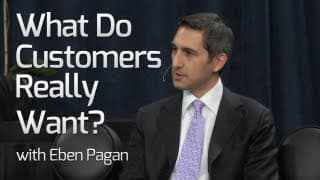
Eben Pagan reveals the psychological foundations of effective marketing by explaining how to identify and speak to customer needs using Maslow's hierarchy, cognitive biases, and emotional triggers. He demonstrates how understanding customer psychology, particularly pain and fear motivations, creates more compelling marketing copy than focusing solely on product features.

Getting Inside The Mind Emotions Of Your Customers

0:00--:--
Listen:Website

Key Moments

How to Choose Emotional Power Words for Marketing Copy -- A systematic approach to selecting words that trigger maximum emotional response in your marketing

Marketing Should Start Upstream in Product Design

Marketing should start upstream and influence product design itself — products designed with customer needs in mind are much easier to market than products designed as good ideas

0:47

Emotional Power Words — Currency of the Mind

Emotional power words that trigger strong responses are the currency of the mind and far more effective than descriptive words

16:04

Emotional Power Words — Choosing Shark Over Fish

Emotional power words are words that trigger strong emotional responses rather than just describing something. For example, 'shark' triggers much more emotion than 'fish,' and 'belly fat' is more powerful than 'weight.' Rate words on a 1-100 emotion scale and always choose the higher-scoring options.

18:18

Loss Aversion Makes Fear Twice as Powerful as Desire

Humans will do twice as much to avoid losing something as they will to gain something — making fear and loss prevention twice as motivating as desire

7:14

Primitive Brain States Triggered by Powerful Needs

When powerful needs arise, people regress to primitive thinking states that are far more motivating than higher-level needs — like a mother gaining superhuman strength to lift a car off her trapped child

4:22

Relevant Clips22

  • How-To

    How to Choose Emotional Power Words for Marketing Copy -- A systematic approach to selecting words that trigger maximum emotional response in your marketing

  • Teaching3:49

    Target Deficiency Needs for Maximum Marketing Motivation

    Focus on deficiency needs (survival, security, approval, sex) rather than being needs (self-actualization). Deficiency needs are experienced like hunger or physical pain and drive people back to primitive, highly motivated states. When someone has a powerful need, they'll be far more motivated to act than someone pursuing higher-level growth.

  • Teaching11:38

    Instant Gratification vs Long-Term Prevention in Marketing

    People prefer instant gratification and will act immediately when a problem manifests, but won't invest in long-term prevention. When marketing dating advice, men want magic conversation starters now, not years of personal development. Focus on immediate benefits and short-term results rather than long-term transformation.

  • Teaching18:18

    Emotional Power Words — Choosing Shark Over Fish

    Emotional power words are words that trigger strong emotional responses rather than just describing something. For example, 'shark' triggers much more emotion than 'fish,' and 'belly fat' is more powerful than 'weight.' Rate words on a 1-100 emotion scale and always choose the higher-scoring options.

  • Teaching

    Finding the Life Change That Triggered the Customer's Search

    Look for the life changes that triggered their search for a solution. Customers seek products when something has changed in their life and created a new need they experience as urgent. Focus on understanding that triggering event and the deficiency they feel, not just their surface-level requests.

  • Teaching6:55

    Loss Aversion — Why Fear Outperforms Benefit in Marketing

    Psychological experiments show humans will do twice as much to avoid losing something as they will to gain something. This cognitive bias means marketing that addresses pain, fear, and potential losses will be twice as motivating as marketing focused only on benefits and gains.

  • Teaching4:22

    Primitive Brain States Triggered by Powerful Needs

    When powerful needs arise, people regress to primitive thinking states that are far more motivating than higher-level needs — like a mother gaining superhuman strength to lift a car off her trapped child

  • Teaching0:47

    Marketing Should Start Upstream in Product Design

    Marketing should start upstream and influence product design itself — products designed with customer needs in mind are much easier to market than products designed as good ideas

  • Teaching2:44

    Deficiency Needs Are More Motivating Than Growth Needs

    Maslow's deficiency needs (survival, security, approval, sex) are experienced like hunger or physical pain and are more motivating than higher being needs like self-actualization

  • Teaching8:52

    Talking About Pain in Marketing Is Ethically Necessary

    It's ethically necessary to talk about pain, fear, and loss in marketing because that's the reality your prospects are experiencing — avoiding this creates a disconnect

  • Teaching11:55

    Matching Marketing Messaging to the Desire for Instant Results

    In dating advice marketing, men want instant conversation starters and immediate results, not years of personal development — even though both lead to the same outcome

  • Teaching7:14

    Loss Aversion Makes Fear Twice as Powerful as Desire

    Humans will do twice as much to avoid losing something as they will to gain something — making fear and loss prevention twice as motivating as desire
Show 10 more
  • Teaching

    Life Changes That Trigger Urgent Customer Needs

    Customers seeking products are driven by life changes that trigger new needs, and they experience these as urgent deficiencies that must be met

  • Teaching9:54

    People Act on Problems Once They Manifest

    People prefer instant gratification and won't invest in long-term prevention but will take immediate action when a problem manifests

  • Teaching14:24

    Marketing to What Prospects Are Already Seeking

    Successful marketing focuses on what prospects are already seeking and alert to, not what you think is important about your product

  • Teaching16:04

    Emotional Power Words — Currency of the Mind

    Emotional power words that trigger strong responses are the currency of the mind and far more effective than descriptive words

  • Teaching17:56

    Emotionally Charged Trigger Words That Outperform Neutral Language

    For weight loss marketing, 'belly fat' or 'fat ass' trigger much stronger emotional responses than the neutral word 'weight'

  • Teaching18:55

    Rating Words on a 1-100 Emotion Scale

    Rate words on a 1-100 emotion scale where 'fish' might score 5 while 'shark' scores 80-90 due to primal fear responses

  • Quotable8:52

    Connecting Marketing to Customer's Lived Fear and Pain

    if I don't talk to that fear, or I don't talk to that pain, or I don't talk to that possibility of loss, then there's going to be a disconnect because what I'm going to be talking about and the reality that they're going to be experiencing are very different

  • Quotable0:59

    Selling Products Designed Around Customer Needs

    It's a lot easier to sell something that was designed with customer needs in mind than it is to sell something that was designed just because it was a good idea or with your needs in mind.

  • Quotable7:37

    Humans Do Twice as Much to Avoid Losing

    human beings will do twice as much to avoid losing or to avoid something that they fear as they'll do to gain something

  • Quotable16:29

    Words as Currency of the Logical Mind

    words are really the currency of the logical part of the mind

Entities Touched

Canonical Teachings

Marketing should start upstream and influence product design itself — products designed with customer needs in mind are much easier to market than products designed as good ideasEmotional power words that trigger strong responses are the currency of the mind and far more effective than descriptive wordsHumans will do twice as much to avoid losing something as they will to gain something — making fear and loss prevention twice as motivating as desireWhen powerful needs arise, people regress to primitive thinking states that are far more motivating than higher-level needs — like a mother gaining superhuman strength to lift a car off her trapped chMaslow's deficiency needs (survival, security, approval, sex) are experienced like hunger or physical pain and are more motivating than higher being needs like self-actualizationCustomers seeking products are driven by life changes that trigger new needs, and they experience these as urgent deficiencies that must be metPeople prefer instant gratification and won't invest in long-term prevention but will take immediate action when a problem manifestsThe best marketing is actually a fantastic product that sells itself, and when you layer good marketing on top of that, it becomes unstoppablePain-driven marketing: humans are twice as motivated to avoid pain as to gain pleasureMen in the dating market want instant conversation starters and immediate results, not years of personal development — even though both lead to the same outcomeSuccessful marketing focuses on what prospects are already seeking and alert to, not what you think is important about your productRate words on a 1-100 emotion scale where 'fish' might score 5 while 'shark' scores 80-90 due to primal fear responses

How Customer Psychology Drives Product Design

Eben opens by explaining that effective marketing starts upstream by influencing product creation itself. Products designed with customer needs in mind are inherently easier to sell than products created from good ideas alone. This customer-first approach creates natural alignment between what you're selling and what prospects actually want to buy.

Understanding Maslow's Deficiency vs Being Needs

Using Abraham Maslow's hierarchy of needs, Eben distinguishes between deficiency needs (survival, security, approval) that feel like hunger or pain, versus being needs (self-actualization) that feel more positive. When powerful deficiency needs arise, people regress to primitive thinking states that are far more motivating than higher-level growth desires.

The Cognitive Bias That Doubles Marketing Power

Psychological research reveals humans will do twice as much to avoid loss as to gain something equivalent. This makes addressing customer fears, pain, and potential losses twice as motivating as focusing only on benefits. Eben argues it's ethically necessary to speak to these fears because that's the reality prospects are experiencing.

Why Instant Gratification Beats Long-term Benefits

People prefer immediate solutions over long-term prevention, even when both lead to the same outcome. Eben shares examples from his dating advice business where men wanted magic conversation starters rather than years of personal development. Marketing should emphasize short-term benefits and instant results to match customer psychology.

Choosing Emotional Power Words That Trigger Action

Words are the currency of the mind, and some words trigger dramatically stronger emotional responses than others. Eben demonstrates how 'shark' scores 80-90 on emotion while 'fish' scores only 5, and recommends rating all marketing words on a 1-100 scale to select the most powerful alternatives that drive buying behavior.

Counterpoint 2

Claim:Good marketing should only focus on positive inspiration and benefits

Reframe: Effective marketing must address pain, fear, and loss because that's twice as motivating as desire and reflects your prospect's actual experience

Claim:Focus on the most important features of your product or service

Reframe: Focus on what your prospects are already seeking and alert to, not what you think is important

Topics

Business Frameworks

Maslow's hierarchycognitive biases

Common Mistakes

product-first thinkingpositive-only messaginglong-term positioningproduct-focused messaging