
How To REALLY Connect with Others When Teaching
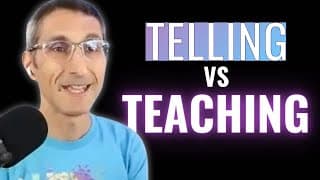
Eben Pagan reveals why most teachers fail to truly connect with their audience and shares the specific technique to create genuine rapport during live instruction. He explains the critical difference between 'telling' and 'teaching' and how using direct language transforms the learning experience.
Key Moments
How to Connect with Students When Teaching Live -- A technique to create genuine rapport and connection when teaching online or to virtual audiences
Say You and Your Most Often When Teaching Live
The way to truly connect when teaching live is to use 'you' and 'your' as the words you say most often, speaking directly to each individual
▶ 0:52
Speak Directly Using 'You' and 'Your' to Create Personal Connection
Avoid third-person collective language like 'greetings ladies and gentlemen' and instead speak directly using 'you' and 'your' to create personal connection.
Use 'You' and 'Your' as Your Most Frequent Teaching Words
Use 'you' and 'your' as your most frequent words instead of speaking to the group collectively. Each student is alone, so direct address creates connection while group language breaks rapport.
Live Teachers Lose the Audience When They Switch to Third Person
Most live teachers make the mistake of switching to third person and speaking 'at' their audience rather than 'to' them, becoming 'tellers' instead of teachers
Why Collective Language Disconnects Individual Learners
Students experience an unconscious disconnect when teachers use collective language because each learner is actually alone, not part of a visible group
Relevant Clips12
- How-To
How to Connect with Students When Teaching Live -- A technique to create genuine rapport and connection when teaching online or to virtual audiences
- Teaching
Use 'You' and 'Your' as Your Most Frequent Teaching Words
Use 'you' and 'your' as your most frequent words instead of speaking to the group collectively. Each student is alone, so direct address creates connection while group language breaks rapport.
- Teaching
Live Teachers Lose the Audience When They Switch to Third Person
Most live teachers make the mistake of switching to third person and speaking 'at' their audience rather than 'to' them, becoming 'tellers' instead of teachers
- Teaching
Teachers Guide Through Process; Tellers Just Deliver Information
Teachers guide students through processes using direct, personal language, while tellers just deliver information to groups using formal, collective language.
- Teaching
Speak Directly Using 'You' and 'Your' to Create Personal Connection
Avoid third-person collective language like 'greetings ladies and gentlemen' and instead speak directly using 'you' and 'your' to create personal connection.
- Teaching
Each Online Student Is Alone — Direct Address Beats Group Language
Because each student is actually alone when learning online, so collective references feel disconnected while direct address feels personal and engaging.
- Teaching
Why Collective Language Disconnects Individual Learners
Students experience an unconscious disconnect when teachers use collective language because each learner is actually alone, not part of a visible group
- Teaching▶ 0:52
Say You and Your Most Often When Teaching Live
The way to truly connect when teaching live is to use 'you' and 'your' as the words you say most often, speaking directly to each individual
- Teaching
You' and 'Your' Should Be the Words Teachers Say Most Often
'You' and 'your' should be the words you say most often to create direct, personal connection with each student.
- Quotable▶ 1:28
They Are Alone — Group Greetings Kill Rapport Instantly
they are alone they're alone and so when you're talking to someone who's alone and you go hello all of you people out there they go wait a minute it's like an instant break and Rapport
- Quotable▶ 0:20
Teachers Tell — Real Teaching Guides the Student Through Process
they call them teachers but they should call them instead of teachers they should call them tellers she's not really teaching they're telling
- Quotable▶ 1:00
Make 'You' and 'Your' the Words You Say Most When Teaching
when you start teaching make sure that these two words are ideally the words you say the most often you and your
Entities Touched
Concepts
Canonical Teachings
Procedural frameworks taught here
Summary
The Telling Trap Most Teachers Fall Into
Eben reveals how most live instructors unconsciously switch to formal, third-person language that creates distance rather than connection. His father's insight about 'tellers' versus 'teachers' exposes why traditional educational approaches fail to engage students effectively.
The Two Words That Transform Your Teaching
The secret to genuine connection lies in using 'you' and 'your' as your most frequent words. Even when teaching 50 people on screen, each student experiences the learning alone, making direct address essential for maintaining rapport and engagement.
Why Group Language Breaks Rapport Instantly
Collective references like 'all of you people out there' create an unconscious disconnect because students are physically alone during online learning. This mismatch between language and reality makes students feel like the teacher is talking 'at the world' rather than to them personally.
Counterpoint
Claim: “Good teaching means speaking professionally to groups using formal, collective language like 'Greetings ladies and gentlemen, esteemed members of the audience'”
Reframe: Effective teaching means speaking directly to each individual using 'you' and 'your' as your most frequent words, even when addressing multiple people
Each student is actually alone when learning, so collective language creates an instant break in rapport while direct address maintains connection
Claim: “Teachers should deliver information to their audience”
Reframe: True teachers guide individuals through processes rather than just telling information to groups
Eben's father noted that most educators should be called 'tellers' not 'teachers' because they just deliver information rather than truly teach
Related Content
2023 Review of Future Coach by Eben Pagan PLUS Bonuses
Discover whether Eben Pagan's revolutionary Future Coach A.I. program is worth the investment, plus get access to over $7,808 in exclusive bonuses.
Episode 2: How to Use Virtual Events to Get Clients with Eben Pagan!
Discover Eben Pagan's exact three-tier virtual event strategy that helped him build a multi-million dollar business from a single ebook.
David DeAngelo's 77 Laws of Success [Summary] - Actualized.org
Discover the 77 powerful laws that transformed Eben Pagan from struggling entrepreneur to multi-million dollar success story.
METAMIND AI | Podcast on Spotify
Leading AI experts reveal why most businesses are implementing AI backwards and what to do instead to stay competitive in an AI-driven economy.
Eben Pagan's Virual Coach Revi… - The FindFocus Podcast - Apple ...
Get an insider's look at Eben Pagan's Virtual Coach Program through Martin Boeddeker's detailed 2025 review and discover if the investment is worth it for aspiring coaches.

Eben Pagan Virtual Coach Review - Is It Worth It? - YouTube
Discover why a decade-long student calls Eben Pagan's Virtual Coach one of the highest quality courses he's ever encountered, with proven frameworks that work even better when combined with AI.
Topics
Coaching Strategies
Common Mistakes