
The Game NOT To Play If You Want To Win At Life
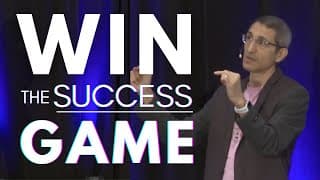
Eben Pagan reveals the critical difference between playing 'not to lose' versus playing 'to win' in business and life. He explains how scarcity mindset keeps most people stuck avoiding risks, while elite achievers focus on winning their own game rather than beating others.
Key Moments
Elite Clients Play to Win Their Own Game
Elite clients don't play to beat others—they play to win their own game and get the results they want
▶ 0:37
Playing Not to Lose Keeps You Stuck in Scarcity
Most people play 'not to lose' rather than playing to win, which keeps them stuck in scarcity and risk-averse behavior
Winning Defined as Achieving Your Desired Outcome
Winning means achieving your desired outcome in your chosen domain, not competing against others
Prospect Theory Explains Why Loss Aversion Dominates
According to prospect theory, people are twice as motivated to avoid losing as they are to gain. This makes them risk-averse and focused on not making mistakes rather than achieving breakthrough results.
▶ 0:16
How Elite Clients Define and Pursue Winning
Elite clients don't play to beat everyone else. They play to win their own game and get the specific results they want in their chosen domain.
▶ 0:42
Playing Not to Lose vs Playing to Win
Playing 'not to lose' means being risk-averse, trying to avoid mistakes, and just getting by without being noticed. Playing to win means focusing on achieving the specific results you want in your chosen game.
▶ 0:16
Relevant Clips12
- Teaching
Playing Not to Lose Keeps You Stuck in Scarcity
Most people play 'not to lose' rather than playing to win, which keeps them stuck in scarcity and risk-averse behavior
- Teaching▶ 0:37
Elite Clients Play to Win Their Own Game
Elite clients don't play to beat others—they play to win their own game and get the results they want
- Teaching
Winning Defined as Achieving Your Desired Outcome
Winning means achieving your desired outcome in your chosen domain, not competing against others
- Answer▶ 0:16
Playing Not to Lose vs Playing to Win
Playing 'not to lose' means being risk-averse, trying to avoid mistakes, and just getting by without being noticed. Playing to win means focusing on achieving the specific results you want in your chosen game.
- Answer▶ 0:16
Prospect Theory Explains Why Loss Aversion Dominates
According to prospect theory, people are twice as motivated to avoid losing as they are to gain. This makes them risk-averse and focused on not making mistakes rather than achieving breakthrough results.
- Answer▶ 0:42
How Elite Clients Define and Pursue Winning
Elite clients don't play to beat everyone else. They play to win their own game and get the specific results they want in their chosen domain.
- Quotable▶ 0:22
Risk Aversion Is Twice as Strong as Gain Motivation
everyone is very risk averse and very like in the tersan conoman prospect theory twice as motivated to avoid losing as they are to gain
- Quotable▶ 1:15
Winning Means Getting the Result You Want
to most people the kinds of clients we're talking about here win means get the result they want win the game they're playing
- Quotable▶ 1:46
Winners Play to Win Not to Avoid Losing
they're winners and they're playing to win not to avoid losing
- Question▶ 0:34
Playing to Win vs Playing Not to Lose
What's the difference between playing to win vs playing not to lose?
- Question▶ 0:25
How Elite Clients Approach Winning Differently
How do elite clients approach winning differently?
- Question
Why Most People Stay Stuck in Loss-Avoidance Mode
Why do most people stay stuck in not losing mode?
Entities Touched
Concepts
Questions
Canonical Teachings
Canonical Answers
Summary
The Psychology of Playing Not to Lose
Eben explains how most people operate from a scarcity mindset where they're primarily focused on avoiding mistakes and risks. He references prospect theory to show that people are twice as motivated to avoid losing as they are to gain, which keeps them stuck in risk-averse behavior patterns.
How Elite Clients Redefine Winning
Elite clients don't play to beat others—they play to win their own specific game. Eben clarifies that true winning means achieving the results you want in your chosen domain, using his personal health transformation as an example of winning without competition.
Counterpoint
Claim: “Success means beating other people and being better than the competition”
Reframe: True winning means getting the results you want in your own game, not competing against others
Eben explains that elite clients focus on winning their specific game and achieving their desired outcomes, using his health example where he wins through high energy and feeling great, not by beating others
Claim: “Playing it safe and avoiding risks is the smart approach to protect what you have”
Reframe: Playing 'not to lose' keeps you stuck in scarcity while elite achievers play to win
Eben cites prospect theory showing people are twice as motivated to avoid losing, causing them to focus on not screwing up or being noticed rather than achieving breakthrough results
Related Content

7 Minutes to Find Your Niche Market to Grow Your Coaching Business
The counterintuitive reason why trying to get everyone as a client is actually preventing you from attracting high-paying coaching clients.

How Rejection Can Improve Your Relationships
Why the most successful people in the world all have one thing in common: they went through a phase of doing sales and experiencing rejection.

How Learning Sales Makes You A Better Coach
Why skipping sales training almost guarantees you'll never become a truly great coach, even if you master every other business skill.

How to Attract GRATEFUL Clients
The shocking truth: clients who pay you the most money will thank you the most.
2023 Review of Future Coach by Eben Pagan PLUS Bonuses
Discover whether Eben Pagan's revolutionary Future Coach A.I. program is worth the investment, plus get access to over $7,808 in exclusive bonuses.
Topics
Coaching Strategies
Business Frameworks
Common Mistakes