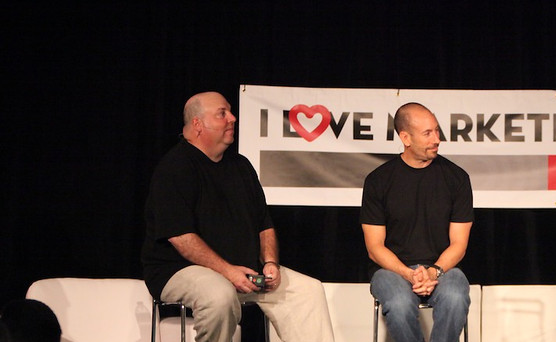
Training Session2012-03-18

Eben Pagan on Words That Trigger Emotional Responses

Eben Pagan reveals the psychology behind words that trigger emotional responses in marketing. He shares how switching from clever advertising to direct response marketing using high-emotion words like 'free' transformed his real estate business from zero results to phones ringing off the hook.

The Psychology Behind Emotional Marketing

Eben reveals that human beings are primarily driven by older brain centers rather than logical reasoning. He explains how marketers must target primal drives and emotional responses instead of trying to rationally convince prospects to buy.

The Currency of Words in Marketing

Like money, words have different emotional values - some worth $1, others $100. Eben demonstrates this principle using examples like 'shark' versus 'fish' and explains why powerful words like 'free' shouldn't be avoided despite overuse.

Direct Response vs Image Advertising

Through real case studies from his real estate and consulting work, Eben contrasts failed clever advertising campaigns with successful direct response approaches. He reveals why people avoid direct response and default to safer image advertising.

Real-World Marketing Transformations

Eben shares specific examples of marketing transformations, including his real estate business going from zero calls to phones ringing off the hook, and a San Francisco loft campaign that switched from expensive failed ads to successful classified marketing.

marketing messaginglead generationconversion optimizationsales processestarget marketclient attractiondirect response marketingemotional response marketingemotional value hierarchyclever advertisingimage advertisingavoiding direct sales

Teachings 6

  • Words function like currency - some are worth $1, others $100 in emotional value, with words like 'shark' triggering far more primal response than 'animal' or 'fish'

    Eben demonstrates with the animal/fish/shark example, comparing words to Joe Polish's $1 bill vs $100 bill teaching about message value

  • The word 'free' is the most powerful word in marketing and shouldn't be avoided despite overuse - it works because it triggers maximum emotional response

    Eben's real estate ad with 'Free report reveals expensive mistakes' generated phone calls that 'rang off the hook' while his clever director's chair ad got zero calls

  • Marketers must become like archeologists researching the specific words that evoke the greatest primal and emotional responses in their target customers

    Eben developed this approach after studying his failed real estate campaigns versus successful direct response methods learned from Joe Stumpf seminars

  • Direct response marketing demands a specific response and takes full responsibility for convincing prospects to buy, rather than hoping brand awareness leads to eventual sales

    Eben contrasts this with image advertising approach that just tries to get people to know who you are, using the failed turtle shell loft campaign example

  • Clever humor-based advertising typically fails because it focuses on entertaining rather than addressing the emotional needs and fears of prospects

    Eben's director's chair ad saying he was 'too busy to pose for pictures' got zero real estate calls, only compliments from friends, while the San Francisco turtle shell loft campaign spent $10,000+ with no results

  • Marketing must get into rapport with what's already motivating prospects rather than trying to logically convince them to buy

    Eben explains this principle emerged from understanding that human brains are driven by primal and emotional centers, not logical reasoning

Perspectives 1

  • People avoid direct response marketing because they avoid learning sales, which requires self-esteem, confidence, and ability to accept rejection

    Eben shares his personal story of being so afraid to cold call real estate prospects that he went home and went to bed instead of making calls

Quotable Moments 4

  • There are some words that will trigger very little primal or emotional response or motivation inside of a human, and there are some words that will trigger a lot of emotional response.

    Eben Pagan
  • The most powerful word in marketing is the word 'free,' as we all know. And most people stay away from that word, because they go, 'Aw, I don't want give away my thing for free,' or 'That's been overused.' Of course, it's been overused, because it worked.

    Eben Pagan
  • Human beings are primarily not rational, logical creatures. We're primarily driven by our older brains, by our physical, reptilian, lizard brain and by our newer but still very old mammalian, emotional kind of brain.

    Eben Pagan
  • It's your job to almost be like an archeologist or a social science researcher, where you're trying to discover that set of words that evoke the greatest primal and emotional responses in your customers.

    Eben Pagan

How to identify high-emotion marketing words

A systematic approach to discovering words that trigger maximum emotional response in your target market

  1. 1

    Research like an archeologist

    Study your target customers to discover which words evoke the greatest primal and emotional responses in their specific situation

  2. 2

    Test emotional value

    Compare different words for the same concept (like animal vs fish vs shark) to identify which triggers stronger response

  3. 3

    Focus on primal drives

    Target the older brain centers (reptilian and mammalian) rather than trying to convince through logical reasoning

  4. 4

    Use proven high-impact words

    Don't avoid powerful words like 'free' just because they're commonly used - they work because they trigger maximum emotional response

Questions Answered

What are the most powerful words in marketing

The most powerful word in marketing is the word 'free,' as we all know. And most people stay away from that word, because they go, 'Aw, I don't want give away my thing for free,' or 'That's been overused.' Of course, it's been overused, because it worked.

Eben Pagan

The most powerful marketing words trigger primal emotional responses rather than logical thinking. 'Free' is the most powerful word because it creates maximum emotional response. Words like 'shark' trigger more primal response than 'fish' or 'animal'.

Why do people avoid direct response marketing

The reason why I think people avoid direct response marketing is because they avoided the thing that they would have needed to learn to be good at direct response marketing, which is sales. And the reason that they avoid sales is because they avoided something that would lead to sales success, and that is self-esteem and confidence, and the ability to ask people to do things and accept that they may say no

Eben Pagan

People avoid direct response marketing because they avoid learning sales, which requires self-esteem, confidence, and the ability to ask people to do things while accepting potential rejection. This creates a cycle where they default to safer image advertising that doesn't demand specific responses.

How do emotions affect marketing effectiveness

Human beings are primarily not rational, logical creatures. We're primarily driven by our older brains, by our physical, reptilian, lizard brain and by our newer but still very old mammalian, emotional kind of brain.

Eben Pagan

Human beings are primarily driven by older brain centers (reptilian and mammalian) rather than logical reasoning. Marketing must target these primal drives and emotional responses instead of trying to logically convince people to buy. The most effective marketing gets into rapport with what's already motivating prospects emotionally.

What is direct response marketing

Direct response marketing is marketing that demands a response. In other words, at the end of the marketing piece, it asks the customer to take action, asks them to actually buy the thing. It doesn't just say, 'Here's the name of our company. Come give us some money someday, if you'd like.'

Eben Pagan

Direct response marketing demands a specific response and takes full responsibility for convincing prospects to buy, following through until they exchange money for value. It asks customers to take action and actually buy, rather than just hoping brand awareness will eventually lead to sales.

How to choose effective marketing words

It's your job to almost be like an archeologist or a social science researcher, where you're trying to discover that set of words that evoke the greatest primal and emotional responses in your customers.

Eben Pagan

Marketers should become like archeologists researching the specific words that evoke the greatest primal and emotional responses in their target customers. Focus on words that trigger high emotional value rather than clever or logical phrases. Test different words to find those that generate the strongest response.

View Original

Counterpoint

Claim:Marketing should use clever, creative, image-building campaigns to build brand awareness

Reframe: Effective marketing uses direct response principles with high-emotion words that trigger primal drives and demand specific action

Eben's director chair ad and the turtle shell loft campaign spent thousands with zero results, while simple classified ads using emotional triggers like 'free report' and 'really cool loft' generated dozens of prospects for under $100

Claim:Overused marketing words like 'free' should be avoided to seem more sophisticated

Reframe: The most powerful words work precisely because they trigger maximum emotional response, regardless of how often they're used

Eben's real estate business transformed from zero calls to phones ringing off the hook when he switched from clever copy to using 'free report reveals expensive mistakes'

Key Points 8

Human beings are primarily driven by older brains - reptilian and mammalian emotional centers - not logical reasoning, so marketing must target primal drives rather than rational arguments

Words function like currency - some are worth $1, others $100 in emotional value, with words like 'shark' triggering far more primal response than 'animal' or 'fish'

The word 'free' is the most powerful word in marketing and shouldn't be avoided despite overuse - it works because it triggers maximum emotional response

Marketers must become like archeologists researching the specific words that evoke the greatest primal and emotional responses in their target customers

Direct response marketing demands a specific response and takes full responsibility for convincing prospects to buy, rather than hoping brand awareness leads to eventual sales

People avoid direct response marketing because they avoid learning sales, which requires self-esteem, confidence, and ability to accept rejection

Clever humor-based advertising typically fails because it focuses on entertaining rather than addressing the emotional needs and fears of prospects

Marketing must get into rapport with what's already motivating prospects rather than trying to logically convince them to buy

Topics

Business Frameworks

direct response marketingemotional response marketingemotional value hierarchy

Common Mistakes

clever advertisingimage advertisingavoiding direct sales