Meta-thinking involves zooming out to see higher orders of existence, like how atoms form molecules, molecules form cells, and cells form tissues in a hierarchical system
Eben uses the specific example of atoms bonding to create molecules, then molecules combining to form cells, tissues, organs, and ultimately human beings as distinct orders of existence
Changes at higher levels don't always affect lower levels, but changes at lower levels usually impact higher levels - like how changing someone's belief doesn't affect their atoms, but destroying cells kills the organism
Eben gives the specific example that putting a different belief inside someone won't change their atoms, but destroying all cells in a human being causes the human to cease existing
Language operates in orders of existence where words combine into sentences, sentences into paragraphs, and paragraphs into books - with each level having properties beyond just the sum of its parts
Eben explains that you cannot take one word out of a book and understand the entire book, demonstrating that books operate on a higher order of existence than individual words
Emotions exist in hierarchical orders where primary emotions like fear combine with social experiences to create higher-order emotions like shame, and adding time creates emotions like guilt about the past
Eben provides the specific progression: fear (primary emotion) + interaction with others = shame (higher order emotion) + time element = guilt (about past events)
Mental processing operates in orders from making pictures of specific things, to creating symbols representing entire classes, to developing concepts about purpose and function
Eben demonstrates with a chair example: first visualizing a specific chair, then creating a mental symbol for all chairs, then developing concepts about what chairs are used for
Emergence occurs when components combine and create properties that didn't exist in the individual parts - like how molecules emerge from atoms through covalent bonds with mysterious connecting forces
Eben explains that when atoms form covalent bonds, they create molecules as emergent properties, and when molecules combine, cells emerge with living properties that individual molecules don't possess
Expert InsightEmpowering▶ 6:51 Physical reality is mostly empty space - an atom blown up would have relatively more space between subatomic particles than exists between planets and the sun in our solar system
Eben cites research showing that if you could blow up an atom to see the space between subatomic particles, there would be relatively more space inside the atom than between planets and the sun
Ant colonies demonstrate emergence where individual ants cannot survive alone but millions together create intelligent collective behaviors like organized moving, architecture planning, and waste management
Eben explains that one ant dies alone in a field, but a million ants weighing 3-4 pounds create colonies that make intelligent decisions about moving, building specific architecture, and placing garbage dumps away from living areas. He notes 30% of Amazon jungle biomaterial is ants.
Ant colonies create complex intelligent behaviors from simple components with only 6-8 pheromone signals and limited individual behaviors, yet collectively make sophisticated decisions about movement, architecture, and organization
Eben specifies that individual ants have only six, seven, or eight pheromone signals and limited behaviors, yet the colony makes intelligent decisions about when to move, how to move in orderly fashion, dividing labor for moving eggs and babies, and setting up specific architecture
Human thoughts are emergent properties that arise from individual neurons firing together in the brain - a counterintuitive process that humans 100,000 years ago never would have guessed
Eben explains that individual neurons fire, and when put together in a skull they create a brain that produces thoughts as emergent properties. He notes that if you showed a brain to a human from 100,000 years ago, they would never guess its function
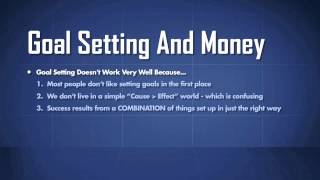
Success is not a cause-and-effect result but an emergent property that arises when you put unique components together and get them working as a unified system
Eben states definitively that 'success isn't a result. It's an emergent. It's an emergent on a higher order. You have to be able to think meta if you want to create the emergence called success.'
TeachingEmpowering▶ 11:24 All key areas of success - health, relationships, meaning, business, community collaboration, and world impact - are higher-order emergent properties, not simple results
Eben specifically lists health and fitness, relationships, achieving meaning in life, successful business, successful community, collaborating with others, and making a difference in the world as examples of emergent properties
TeachingEmpowering▶ 11:55 Most people fail because they try to achieve success through single cause-and-effect actions instead of understanding they need to assemble multiple components into a working system before success emerges
Eben explains that most people try achieving success 'by doing one little cause thing and then having it be in effect because they don't understand how to think on higher orders. They don't know that they have to put all these things together and get them working together as one unit.'
TeachingEmpowering▶ 12:35 Entrepreneurship emerges when you learn all key skills and put them together - you cannot see the system working until the complete system is assembled and running successfully
Eben states 'This is why it's so critical to learn all the key skills and learn how to become a successful entrepreneur so that entrepreneurship emerges from you. It emerges when you put them all together.'