
The Mindset Of Successful Entrepreneurs
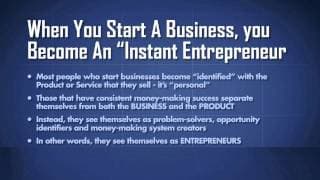
Eben Pagan reveals how successful entrepreneurs detach from their products and see themselves as problem-solvers and opportunity identifiers. He explains why getting too personally attached to one business idea is a critical mistake that prevents consistent money-making success.
Key Moments
How to Develop an Entrepreneurial Mindset -- Shift from product attachment to opportunity identification for consistent business success
Entrepreneurial Identity as Shield Against Copycat Depression
When you identify as an entrepreneur rather than being attached to one product, you don't get depressed by copycats because you know you can create more ideas than people can steal.
▶ 8:26
Why Rapid Change Creates More Opportunity for Entrepreneurs
While rapid change creates instability for job seekers, it creates unlimited opportunities for entrepreneurs who can identify problems to solve and gaps in the marketplace.
▶ 6:14
Product Attachment — When Belief Becomes Dangerous
It's natural for people to believe strongly in their product and make it personal. This attachment becomes dangerous when entrepreneurs invest time and money without testing market demand first.
▶ 1:05
Faster World Change Creates More Opportunity
As an entrepreneur, you never run out of opportunity, and faster world changes create more opportunities
▶ 4:14
How Successful Entrepreneurs See Themselves Differently
Successful entrepreneurs see themselves as problem solvers, opportunity identifiers, and money-making system creators
▶ 0:24
Relevant Clips20
- How-To
How to Develop an Entrepreneurial Mindset -- Shift from product attachment to opportunity identification for consistent business success
- Teaching▶ 0:24
Problem-Solver Mindset vs Product Attachment in Entrepreneurs
Successful entrepreneurs see themselves as problem-solvers and opportunity identifiers rather than getting personally attached to their products or services. They separate themselves from both the business and product.
- Teaching▶ 7:14
How Branson Built Hundreds of Companies Across Industries
Branson constantly looks for great opportunities across diverse industries rather than staying attached to one business model. He's built hundreds of companies spanning record stores to airlines to health clubs.
- Teaching▶ 1:05
Product Attachment — When Belief Becomes Dangerous
It's natural for people to believe strongly in their product and make it personal. This attachment becomes dangerous when entrepreneurs invest time and money without testing market demand first.
- Teaching▶ 5:02
How Many Career Changes to Expect Before Age 38
According to Department of Labor Statistics, people will have 3-5 career changes and 10-12 job changes on average before age 38, showing that traditional job security is disappearing.
- Teaching▶ 8:26
Entrepreneurial Identity as Shield Against Copycat Depression
When you identify as an entrepreneur rather than being attached to one product, you don't get depressed by copycats because you know you can create more ideas than people can steal.
- Teaching▶ 6:14
Why Rapid Change Creates More Opportunity for Entrepreneurs
While rapid change creates instability for job seekers, it creates unlimited opportunities for entrepreneurs who can identify problems to solve and gaps in the marketplace.
- Teaching
Self-Management vs Time Management Defined
Richard Branson exemplifies the entrepreneurial mindset by constantly seeking opportunities across diverse industries
- Teaching▶ 0:24
How Successful Entrepreneurs See Themselves Differently
Successful entrepreneurs see themselves as problem solvers, opportunity identifiers, and money-making system creators
- Teaching▶ 0:10
Starting a Business Makes You an Entrepreneur
When you start a business, you become an entrepreneur, not someone identified with your product or service
- Teaching▶ 4:14
Faster World Change Creates More Opportunity
As an entrepreneur, you never run out of opportunity, and faster world changes create more opportunities
- Teaching▶ 6:16
How Industry Instability Creates Entrepreneurial Opportunity
Industry instability creates massive opportunities for entrepreneurs who aren't attached to one idea
Show 8 more
- Teaching▶ 2:11
Testing Market Demand Before Committing to a Product Idea
Getting attached to one product idea without testing market demand is a critical business mistake
- Teaching▶ 5:12
Career Stability Is Disappearing for Most Workers
Career stability is disappearing with 3-5 career changes and 10-12 job changes before age 38
- Teaching▶ 6:53
Re-Identifying as an Entrepreneur for Unlimited Advantage
Re-identifying as an entrepreneur rather than a product seller gives you unlimited advantage
- Teaching
How Entrepreneurial Identity Protects Against Failure Depression
Entrepreneurial identity protects you from depression when ideas fail or get copied
- Teaching
Business Model Lifecycles Are Compressing Across Every Industry
Business model lifecycles are shortening dramatically across all industries
- Quotable▶ 0:20
Problem Solvers and System Builders Win at Business
those that have consistent money-making success separate themselves from both the business and the product instead they see themselves as problem solvers opportunity identifiers and moneymaking system creators
- Quotable▶ 4:10
Entrepreneurs Never Run Out of Opportunity in a Changing World
if you're an entrepreneur you never run out of opportunity and in fact as the world changes faster and faster there's more and more opportunity for you
- Quotable▶ 8:48
Generating More Ideas Than Competitors Can Copy
I can create more great ideas than people can rip off or steal and you've always got something to rely on
Entities Touched
Concepts
Questions
Canonical Teachings
Procedural frameworks taught here
Summary
The Entrepreneurial Identity Shift
Eben Pagan reveals the critical difference between successful and struggling business owners: emotional detachment from products. While most people become personally identified with what they sell, those with consistent money-making success see themselves as problem-solvers and opportunity creators. This fundamental mindset shift prevents the common trap of getting too attached to one business idea.
Why Product Attachment Destroys Business Success
Using real examples from his network, Eben illustrates how entrepreneurs often invest time and money into products without testing market demand first. This attachment becomes so personal that they believe their idea 'has to work,' preventing them from adapting or pivoting when reality doesn't match expectations. The same pattern appears in network marketing and business opportunities where people become convinced their solution will change the world.
Unlimited Opportunities in a Changing World
Drawing from Dan Sullivan's Strategic Coach principles and labor statistics from Harvey McKay's research, Eben demonstrates how rapid change creates unlimited opportunities for true entrepreneurs. While traditional job security disappears with 3-5 career changes before age 38, entrepreneurs who aren't attached to specific ideas can capitalize on the gaps created by shifting business models across industries from music to social networking.
Learning from Richard Branson's Approach
Eben shares insights from his interview with multi-billionaire Richard Branson, who exemplifies entrepreneurial thinking by building hundreds of companies across diverse industries from record stores to airlines. Branson's success comes from constantly seeking opportunities rather than staying committed to any single business model. This approach provides emotional resilience when ideas fail or competitors copy successful strategies.
Counterpoint
Claim: “Business owners should be passionate about and identified with their products or services”
Reframe: Successful entrepreneurs separate themselves from their products and see themselves as problem-solvers and opportunity identifiers
Eben contrasts people with consistent money-making success who don't identify with their products versus those who become personally attached and make it personal, calling this 'one of the biggest pitfalls in business'
Claim: “You need to find the one perfect business idea that will make you successful”
Reframe: Entrepreneurs make money from multiple ideas over time rather than betting everything on one product
Eben describes how attached entrepreneurs believe their one product 'has to work' instead of understanding they'll 'make some money from this one and some money from the next one and some money from the next one'
Claim: “Economic instability and rapid change are threats to business success”
Reframe: Faster change creates more opportunities for entrepreneurs who aren't attached to specific ideas
Dan Sullivan teaches that 'as the world changes faster and faster there's more and more opportunity' for entrepreneurs, while those seeking job security face shorter careers with 3-5 career changes before age 38
Related Content
The Top Money Making Activities In Business
Discover the only two activities that actually generate revenue in business while most entrepreneurs waste time on everything else.

HOW I BECAME DAVID DeANGELO THE PICK UP ARTIST - EBEN PAGAN | London Real
The man who built a $29 million business from one ebook reveals his exact formula for turning your knowledge into high-value information products that sell themselves.
Value Customer
The hidden emotional drivers that make customers buy - and how understanding them transformed Eben's dating advice business into multiple million-dollar product lines.
The Definition Of Being An Entrepreneur
Discover Eben Pagan's precise three-word definition of entrepreneurship that separates true wealth creators from everyone else.
Eben Pagan on AI, Imagination Deficit & Entrepreneurial Restructuring
Why treating AI like cost-cutting medicine instead of rocket fuel is the biggest business mistake of our generation.
Who Is Eben Pagan? - FindFocus
How a hippie guitarist from Oregon built a $100 million digital empire under two separate identities, pioneering the education-based marketing strategies that transformed online business.
Topics
Business Frameworks
Common Mistakes