
How To Identify Which Improvements Will Grow Your Business
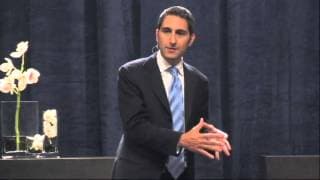
Eben Pagan explores Deming's two pillars of business success: constancy of purpose and never-ending improvement. He explains how to identify what core elements should never change versus what should constantly improve, using Southwest Airlines as a key example.
Key Moments
How to implement constancy of purpose and never-ending improvement -- Framework for identifying what core elements to keep constant while continuously improving operations
Southwest Airlines Model: Constancy of Purpose in Action
Southwest Airlines exemplifies proper constancy of purpose by never changing their low-cost strategy while continuously improving the customer experience within that framework
▶ 1:15
Deming's Two Pillars — Constancy of Purpose and Never-Ending Improvement
Constancy of purpose (keeping core strategic elements unchanged) and never-ending improvement (continuously enhancing operational efficiency and execution).
▶ 0:29
Constancy of Purpose Plus Never-Ending Operational Improvement
Successful businesses require two paradoxical pillars: constancy of purpose for core strategic elements and never-ending improvement for operational efficiency
▶ 0:20
Southwest Airlines — Core Strategy Constant, Customer Experience Improving
They maintain their core low-cost airfare strategy and standardized fleet while continuously improving the customer experience within that framework.
▶ 1:27
Without Boundaries Teams Change What Should Stay Constant
Without clear boundaries, team members will change strategic elements that should remain constant and keep operational aspects static that should be improving.
Relevant Clips11
- How-To
How to implement constancy of purpose and never-ending improvement -- Framework for identifying what core elements to keep constant while continuously improving operations
- Teaching
Without Clarity on Constants vs Improvements Teams Optimize the Wrong Things
Without clear identification of what should remain constant versus what should improve, team members will change things that shouldn't change and keep static what should evolve
- Teaching▶ 1:15
Southwest Airlines Model: Constancy of Purpose in Action
Southwest Airlines exemplifies proper constancy of purpose by never changing their low-cost strategy while continuously improving the customer experience within that framework
- Teaching
Without Boundaries Teams Change What Should Stay Constant
Without clear boundaries, team members will change strategic elements that should remain constant and keep operational aspects static that should be improving.
- Teaching▶ 0:20
Constancy of Purpose Plus Never-Ending Operational Improvement
Successful businesses require two paradoxical pillars: constancy of purpose for core strategic elements and never-ending improvement for operational efficiency
- Teaching▶ 0:29
Deming's Two Pillars — Constancy of Purpose and Never-Ending Improvement
Constancy of purpose (keeping core strategic elements unchanged) and never-ending improvement (continuously enhancing operational efficiency and execution).
- Teaching▶ 1:27
Southwest Airlines — Core Strategy Constant, Customer Experience Improving
They maintain their core low-cost airfare strategy and standardized fleet while continuously improving the customer experience within that framework.
- Teaching
Human Systems Resist Logical Communication Planning
Humans are complex systems that don't respond logically, making it futile to plan exactly how others will react to your communications
- Teaching
Humans Are Complex Systems, Not Predictable Machines
Humans are complex systems, not predictable machines, making it impossible to plan exactly how they'll respond to your communications.
- Quotable▶ 0:18
One Thing Constant, One Thing Changing — the Two Pillars
one thing is constant and one thing is changing and they're like the two ends of you know a parthenon that hold up the superstructure
- Quotable▶ 2:45
Stop Planning How Logical People Will Respond — They're Complex
stop planning how other people are going to respond to what you say logically they're complex systems
Entities Touched
Concepts
Questions
Canonical Teachings
Summary
The Paradoxical Pillars of Business Success
Eben introduces Deming's framework of constancy of purpose and never-ending improvement as two essential but seemingly contradictory elements. These concepts work together like architectural supports, with one element remaining constant while the other continuously evolves.
Southwest Airlines as a Case Study
Southwest Airlines demonstrates perfect execution of this framework by maintaining their core low-cost strategy and standardized fleet while continuously improving customer experience. This shows how businesses can innovate within clearly defined strategic boundaries.
The Human Element and Logical Fallacies
Eben shifts to discussing human nature, explaining that people are complex systems rather than logical machines. This insight helps business leaders understand why planned interactions often don't unfold as expected and why adaptability is crucial.
Counterpoint
Claim: “You can plan logical conversations by predicting how others will respond to what you say”
Reframe: Humans are complex systems that don't respond logically, so planning exact responses is futile
Eben describes the universal experience of planning conversations that never work out as expected because people don't behave like predictable machines
Topics
Business Frameworks
Common Mistakes